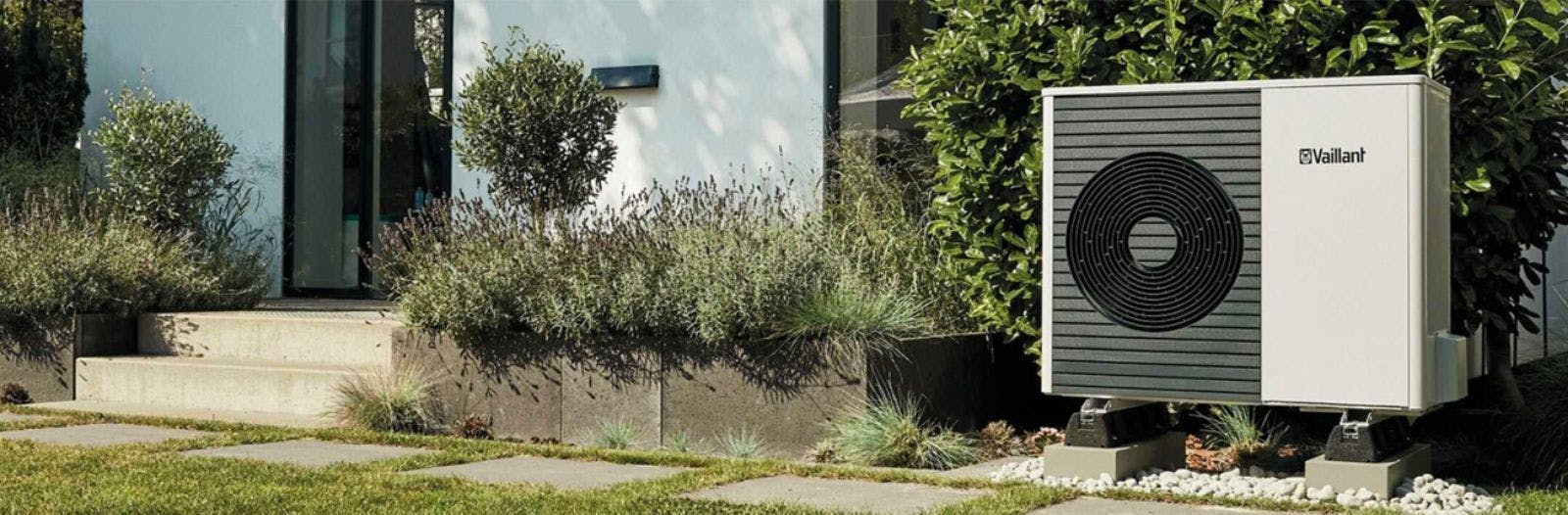
If you are thinking about an air source heat pump, it is natural to worry about noise. Homeowners often ask: “Will it keep me awake at night?” and “Will the neighbours complain?” The reality is that a modern system, properly sited and installed, should be a quiet background presence rather than a disturbance.
Typical air source heat pump sound levels
Most domestic air source heat pumps are designed to meet strict noise regulations and are comparable to a modern fridge or a quiet dishwasher when heard from a few metres away. You will notice a gentle hum when it is running at higher output, and a brief increase during certain cycles, but it should not be intrusive indoors.
Manufacturers quote sound power levels, which can look high on paper, but the sound you actually hear (sound pressure) reduces quickly with distance. In everyday use, the main goal is to ensure it is positioned and installed in a way that lets that sound dissipate naturally.
A well-sited unit typically blends into background noise outdoors
Indoors, you should hear little more than a faint hum when it is running
Short, occasional changes in sound are usually part of normal operation
What creates noise in an air source heat pump?
Understanding what you are hearing can remove a lot of anxiety. A heat pump has several components that all contribute a little to the overall sound, especially when it is working harder on a cold day.
Fan sound
The outdoor fan pulls air across the heat exchanger. At low speed, it produces a soft whoosh, similar to a pedestal fan on a low setting. When the system needs more heat, the fan may ramp up, so you will notice a slightly stronger airflow sound, still steady and consistent.
Compressor hum
Inside the outdoor unit, the compressor is the main source of mechanical sound. This is usually a low-frequency hum, which should be smooth and regular. Good quality units include sound insulation and rubber mounts that keep this noise down and prevent it travelling into walls.
Defrost cycles
In cold, damp weather, the system occasionally reverses to defrost the outdoor coil. During this cycle, you may hear a change in tone, a brief whoosh, or trickling sounds as ice melts. These noises are short-lived and are a normal part of efficient operation.
Vibration and transmission
Even a fairly quiet unit can seem louder if vibration is transmitted into the building. This usually happens if the unit is rigidly fixed to a wall without proper cushioning, or if pipework is tight against a structure. Managing vibration is one of the most effective ways to keep an installation feeling quiet.
Real-world factors that affect how loud it feels
Two homes with the same model of heat pump can experience it very differently. The surroundings and mounting method matter just as much as the manufacturer’s specification when it comes to perceived noise.
Distance and direction
Sound levels drop quickly with distance, so even moving a unit a couple of metres further from a bedroom window can make a noticeable difference. Direct line of sight between the unit and a window, patio or neighbour’s garden can also affect how easily the sound reaches you.
Walls, fences and reflections
Solid surfaces such as brick walls and close-board fences can reflect sound back towards the house. A unit placed in a tight corner may sound louder than the same unit in a more open spot. Sometimes simply changing angle or position slightly is enough to reduce these reflections.
Mounting: brackets versus slab
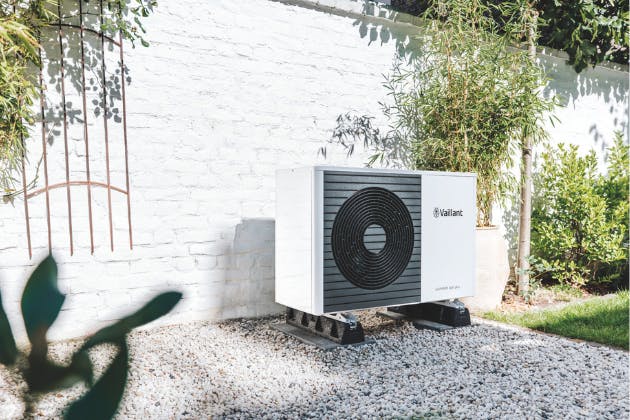
Wall brackets are useful when ground space is limited, but they can transmit vibration if not designed and isolated correctly. A concrete slab with good anti-vibration pads often gives the quietest result, especially near bedrooms or living spaces.
Night-time background noise
At night, general background noise drops, so normal operational sounds become more noticeable. Modern controls can often reduce fan speeds or limit operation during sensitive hours, keeping things as unobtrusive as possible while still maintaining comfort.
Practical steps to keep your heat pump quiet
Thoughtful planning and simple maintenance go a long way towards a peaceful system. If you are at the design stage, choosing the right location and mount is the biggest win for long-term comfort.
Choosing a sensible location
Try to avoid positioning the unit directly under bedroom windows or in an echoey corner between two walls. In many commuter-belt homes with narrow side passages, a small shift along the wall, or turning the unit so the fan faces away from the house or neighbours, can significantly reduce how noticeable it is.
Keeping airflow clear
Blocked or restricted airflow makes the fan work harder and can increase noise. Keep at least the manufacturer’s recommended clearance in front and around the unit, and avoid placing it behind dense trellis or tall bins.
Using anti-vibration mounts
Good installers will use anti-vibration pads under feet or between brackets and the wall. These rubber or composite pads absorb small movements and stop them turning into structure-borne sound inside the house. If your unit feels ‘buzzy’ indoors, upgrading the mounting can make a big difference.
Routine cleaning and maintenance
Leaves, twigs and debris caught in or around the unit can cause rattles and whistling sounds. Gently clear away leaves, check nothing is touching the fan guard, and make sure plants are trimmed back. Regular servicing also keeps moving parts lubricated and secure.
When increased noise suggests a problem
Gradual or sudden changes in sound often indicate something is not quite right. Catching these early usually prevents more serious issues, so it is worth paying attention to how your heat pump normally sounds.
Common noise-related faults
If you notice new rattles or metallic noises, it can be as simple as a loose panel or fixing. A rhythmic ticking or knocking could be a fan blade slightly out of balance, sometimes caused by a small bit of debris. Louder whooshing or repeated noisy defrost cycles might point to icing problems or airflow issues.
Any harsh grinding, squealing or very loud humming should be checked quickly, as it may involve the fan motor or compressor. In these cases, switching the unit off and booking a professional inspection is sensible.
The role of servicing and repairs
Regular servicing keeps your system efficient and quietly reliable, and it also gives an engineer the chance to spot developing issues early. If your heat pump has become noisier over time, a service visit can often restore it to its usual background hum.
For more detailed support on fault-finding or persistent noise, it is worth speaking to a specialist engineer. You can learn more about professional checks on our servicing and repair page.
Getting expert help with design, siting and noise
The best time to think about noise is before installation. A well-designed system will take into account bedroom locations, neighbours, ground levels and mounting options so that noise is minimised from day one. You can read more about how we approach this on our heat pump installation page.
If you would like tailored advice on noise, siting or an existing unit that seems louder than it should be, you can request an assessment from The Heat Pump Guy. Call 01689 495672 to discuss your home or to book a survey, and we will help you enjoy efficient heating without unwanted noise.