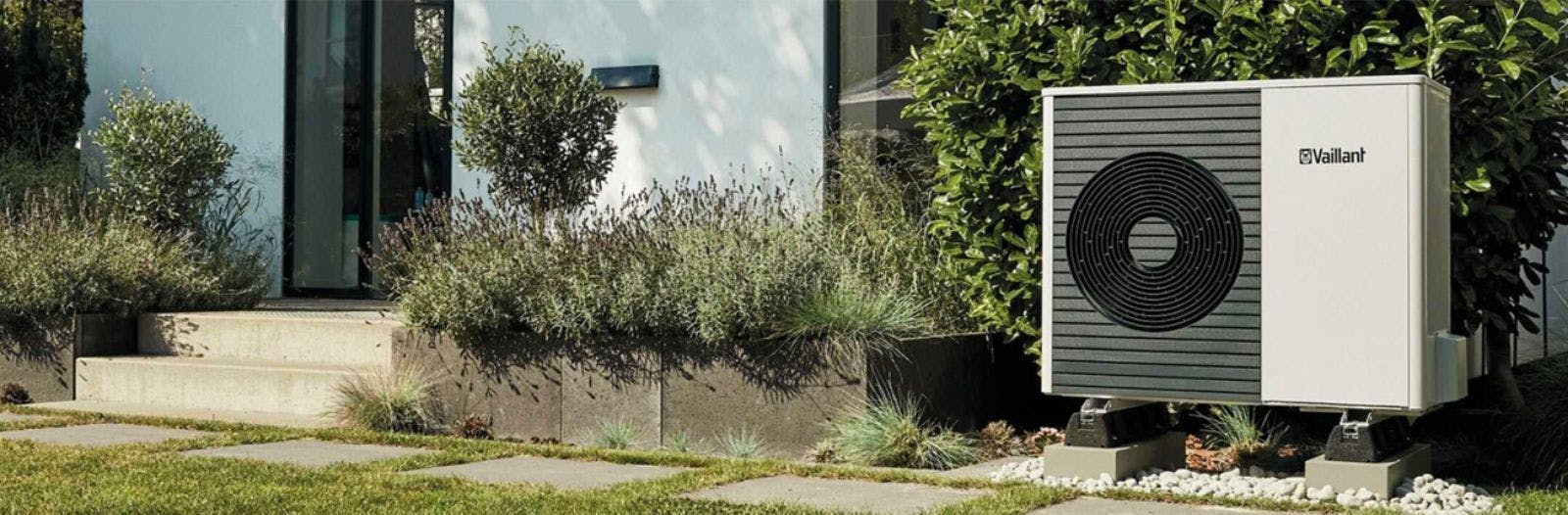
If your air source heat pump has stopped heating your home, it can feel stressful, especially in cold weather. Start by staying safe: do not remove sealed panels, and never attempt your own electrical or refrigerant work. The checks below are safe for most homeowners and can often highlight simple issues before you call an engineer.
1. Check the controller is actually calling for heating
The first step is to make sure your heat pump is being told to heat the house, not just the hot water cylinder. On many systems, there are separate settings or modes for space heating and hot water.
Look at your main controller or heat pump interface and confirm it is in heating mode and not set to ‘hot water only’ or ‘off’. If there is a schedule, check that you are currently within a heating time period.
If changing the mode to heating makes the unit start up and your radiators slowly warm, it was likely just a control setting. If the display refuses to switch to heating or immediately shows a warning, it is time to contact a professional.
2. Check target flow temperature and room setpoints
Heat pumps usually run at lower temperatures than boilers, so a small change in settings can make the house feel cooler. If the flow temperature is set very low, the system may struggle in colder weather.
Check the target flow temperature on the heat pump controller (often shown in °C)
Check each room thermostat is set higher than the current room temperature
Look for any ‘holiday’ or ‘eco’ mode that may be reducing temperatures
If your flow temperature is below about 35–40°C on a radiator system, gently increase it a few degrees at a time and give the system an hour or two to respond. For underfloor heating, settings are often lower, so follow your installer’s guidance.
If you raise the temperature but the radiators never get even mildly warm, or the controller keeps dropping the flow temperature back down on its own, that suggests a control or sensor issue that needs an engineer.
3. Look for thermostat and programmer conflicts
Modern systems often have multiple controls: a central programmer, individual room thermostats and the heat pump controller. If these are fighting each other, the system may not heat when you expect.
Check that none of your room thermostats are set to ‘off’, ‘frost’ or a very low temperature. Then look at your programmer or app to confirm that heating is actually scheduled on at the time you want warmth.
If one area of the house is warm and another is cold, see whether that zone has its own control which might have been turned down. If you correct the settings and the affected rooms heat up over the next couple of hours, you have probably solved the problem. If controls seem to be set correctly but the heating still will not run, a wiring or control fault is likely and you should book a visit.
4. Check for error codes or warning lights
Your heat pump’s display, and sometimes a separate controller, will usually show an error code or flashing light if something is wrong. This can give valuable clues even if you cannot fix it yourself.
Note down any exact error codes or messages, along with what the system was trying to do at the time. Some basic warnings, such as a temporary communication glitch, may clear themselves after a reset following your manufacturer’s instructions.
If an error returns quickly, or mentions things like ‘high pressure’, ‘low pressure’, ‘refrigerant’, ‘compressor’ or ‘fan fault’, stop there and call an engineer. Those issues are not safe to tackle yourself.
5. Confirm system pressure where you can see it
Some air source heat pump systems have a sealed central heating circuit with a pressure gauge, often near the hot water cylinder or in an airing cupboard. Not all systems make this visible, so do not remove panels to find it.
If you can clearly see a gauge, check the pressure when the system is cold. Many designs expect something like 1.0–1.5 bar, but your installer may have specified differently. A reading right at zero usually means the system needs repressurising.
Homeowners who are confident and have been shown how may be able to top up safely using the filling loop, but overfilling or using the wrong valves can cause damage. If you are unsure, or if the pressure keeps dropping after a top up, it is time to stop and arrange a professional inspection.
6. Check if the unit is in defrost mode
In cold, damp weather, the outdoor unit will regularly defrost itself. During this time, it may temporarily stop heating the house and might even blow cooler air indoors for a short period.
Look at the outdoor unit: if the coil is icy or you notice steam rising from it, the system may be in defrost. This is normal and should only last several minutes at a time.
If your heat pump seems stuck in defrost for a long time, or ice is building up heavily and not clearing, that points to a fault with sensors, refrigerant levels or airflow that needs an engineer’s attention.
7. Make sure outdoor airflow is not blocked
Air source heat pumps need plenty of clear air around the outdoor unit. Blocked airflow can severely reduce heating performance or cause the unit to shut down to protect itself.
Check for leaves, snow, debris, garden furniture or covers blocking the sides or back of the unit. Make sure there is good clearance in front of the fan grille and that no objects are leaning against the unit.
You can gently remove loose debris from around the base and grille, but do not poke tools into the fan or coil. If the fan is not spinning at all when the unit is calling for heat, or you hear loud scraping or grinding noises, switch the unit off and call an engineer.
8. Check home electrics and isolators
If the heat pump is completely dead with no lights, sounds or display, a power issue could be the cause. This is one of the simplest things to check safely.
Look at your consumer unit (fuse board) for any tripped breakers related to the heat pump, immersion heater or heating controls. Reset once if safe to do so, and see whether the heat pump powers back up.
Also check any local isolation switches near the indoor unit, hot water cylinder or outdoor unit are set to on. If a breaker trips again immediately, or you see signs of burning or damage, do not keep resetting it. Leave the power off and contact a professional promptly.
9. Look at radiators, underfloor zones and valves
If part of the house is warm and another part is cold, the issue may be with valves or thermostats on that specific circuit rather than the heat pump itself. This is common with mixed radiator and underfloor heating systems.
Feel the flow and return pipes near the affected zone, if safely accessible. If the main pipes from the heat pump are hot but the branch to one area is cold, the zone valve or pump for that area may not be opening or running.
Check any local thermostats are turned up and not in ‘off’ mode. You can also make sure manual radiator valves are fully open. If a zone remains stubbornly cold despite correct settings, it is sensible to call an engineer to check the valves, actuators or pumps.
How heat pumps feel different compared to boilers
Even when everything is working correctly, a heat pump can feel different to a gas or oil boiler. Radiators are usually warm rather than too hot to touch, and the system tends to run for longer, steadier periods.
This gentle approach is normal and efficient, as the system is topping up heat rather than blasting high temperatures. In cold snaps, it is often better to leave heating on for longer at a slightly lower setpoint instead of big on/off swings.
If your home reaches and maintains the set temperature, and the system runs quietly and steadily, it is probably operating as intended, even if it feels less intense than a traditional boiler.
When to call in a professional
If you have worked through these checks and your home is still not heating properly, there may be an underlying fault with sensors, refrigerant, pumps or controls. Persistent error codes, repeated tripping, unusual noises or visible ice build-up are all clear signs to stop DIY investigation.
For expert help with fault finding, servicing or urgent repairs, contact The Heat Pump Guy on 01689 495672 or visit our Servicing & Repair page to arrange a visit. If you suspect your system is undersized or poorly designed, we can also carry out a full installation assessment and advise on improvements or replacement options.