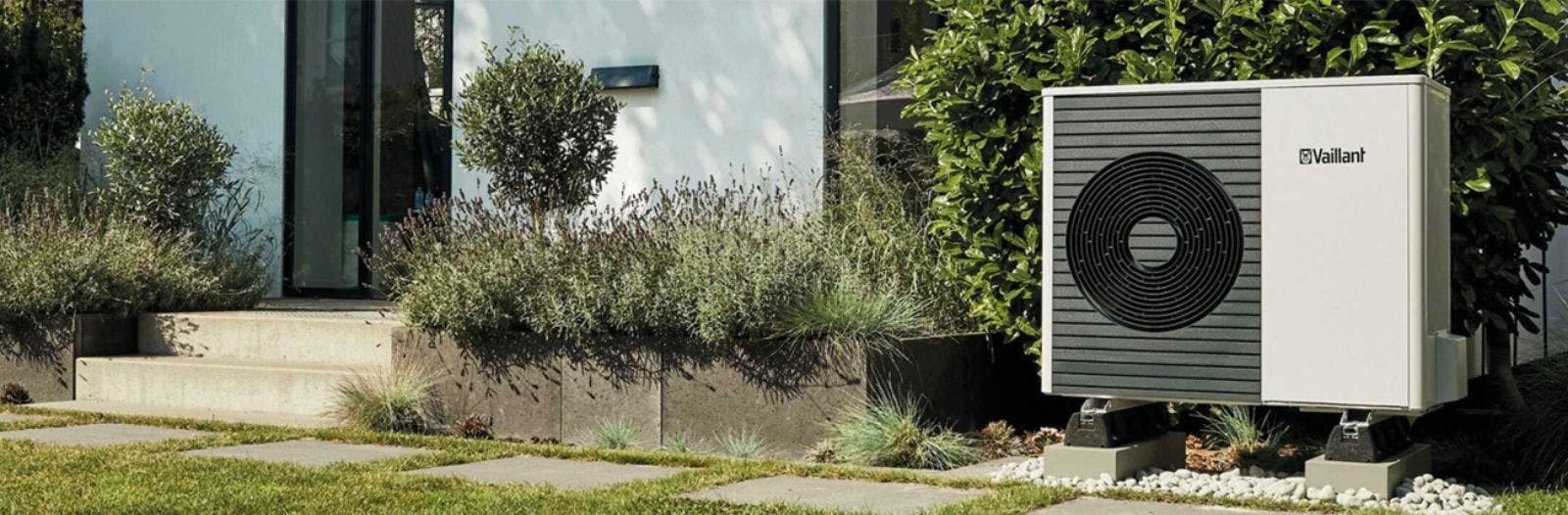
If you are considering an air source heat pump, it is normal to worry that you will have to replace every radiator in the house. In reality, many homes can keep most of their existing radiators, as long as the system is designed properly and the house holds heat well.
How heat pumps and radiators work together
Traditional boilers often run with very hot water, so radiators feel almost too hot to touch. Heat pumps usually work at lower flow temperatures, which is where some confusion starts. Lower temperature water means each radiator gives off less heat, unless it is a bit larger or runs for longer.
The key idea is simple: match the heat a room is losing with the heat the radiator can put back in. Good insulation reduces heat loss, so you can get away with smaller radiators. Poor insulation or tiny radiators make the heat pump work harder and can leave rooms feeling cool.
Signs your existing radiators might be suitable
Many homeowners are pleasantly surprised to find that their current radiators are already a good match for a heat pump system. You may only need modest tweaks, not a full replacement in every room.
Well insulated home: Cavity walls filled, decent loft insulation, and modern double glazing mean lower heat loss.
Radiators already run warm, not scorching: If your boiler happily heats the home with its flow temperature turned down, that is a good sign.
Oversized or double panel radiators: Larger radiators, tall models, or double panel types often work well at lower temperatures.
Underfloor heating: This naturally suits low temperature systems and pairs very well with heat pumps.
If you have rooms that currently heat quickly and stay comfortably warm without the boiler blasting, there is a fair chance those radiators will adapt well to a heat pump with careful design.
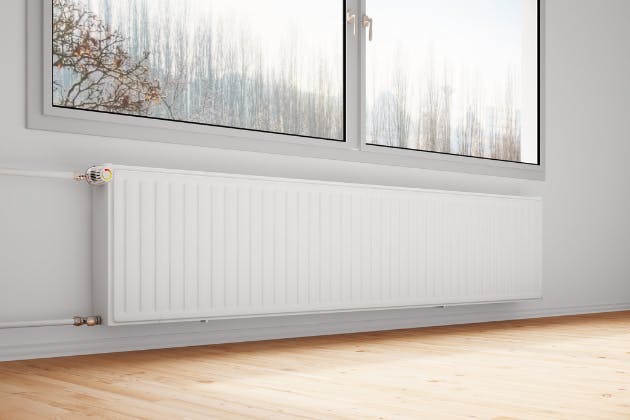
When radiator upgrades are likely to help
Some homes will benefit from swapping or adding radiators in key areas. This is not a failure of the heat pump, but a sign that the current emitters are not matched to the heat demand of the rooms.
Cold spots are a major clue. If certain rooms are always chilly unless the boiler runs flat out, they may have small single panel radiators or older models that simply cannot deliver enough heat at lower flow temperatures. Enlarging those radiators or switching to modern double panel convectors can make a big difference.
Homes with high heat loss are also more likely to need upgrades. Older properties with thin walls, draughts and single glazing leak heat quickly. In these cases you either improve the insulation, fit larger emitters, or a combination of both. Sometimes older microbore or narrow pipework can limit how much heat a radiator can carry, so a designer may recommend targeted pipework improvements in problem areas.
Alternatives to replacing every radiator
You rarely need to replace all radiators in one go. A thoughtful approach can focus investment where it matters most while keeping disruption manageable.
Targeted radiator changes
A common strategy is to prioritise the rooms you care about most: living room, main bedroom and frequently used spaces. You can upgrade these radiators to larger, more efficient models first, then review how the home feels once the heat pump is running.
Another option is to add an extra radiator to a particularly cold room rather than swapping the existing one. This can be easier in spaces with accessible pipe runs or where wall space is limited for a single very large radiator.
Fan convectors and low temperature emitters
Fan convectors are compact units that use a small fan to blow room air across a heat exchanger, giving off more heat from a smaller footprint. They work well at low water temperatures and can be handy in tight spaces like kitchens or hallways.
However, they do introduce a gentle fan noise, and some people prefer the silent operation of traditional radiators. They also need an electrical connection, so installation can be slightly more involved than a straightforward radiator swap.
Balancing, controls and system cleaning
Before assuming every radiator is undersized, it is worth checking system balance and controls. Properly balancing radiators ensures each room gets its fair share of hot water, which can fix uneven temperatures. Modern thermostatic radiator valves and smart controls help the heat pump run efficiently without constant fiddling.
If the system is old and sludgy, a good clean, such as a powerflush, can improve circulation so radiators deliver their designed output. This is often part of sensible preparation for a new heat pump installation.
The role of a heat loss survey and room-by-room design
The only reliable way to know if your radiators are suitable is to measure, not guess. A proper heat loss survey looks at each room, the construction of the walls, floors and roof, window types, and any draughts. From this, a designer calculates how much heat each room needs on the coldest days.
Once you know the heat demand, it is straightforward to check whether the existing radiator in each room can deliver that heat at a sensible flow temperature for a heat pump. If it cannot, you can then decide whether to upgrade the insulation, increase the radiator size, or both. This approach ties neatly into EPC and detailed heat loss survey services that provide a clear, evidence based plan.
Linking this with a professional heat pump installation design ensures the system is sized correctly, runs efficiently and feels comfortable throughout the home.
Common myths about radiators and heat pumps
“Radiators must be boiling hot to heat a room”
Many people equate very hot radiators with comfort, but that is not the full story. Comfort comes from steady, even warmth and surfaces that are not cold to the touch. Heat pumps aim to maintain this gently over time, rather than blasting heat in short bursts.
With a well designed system, radiators will feel warm rather than scorching, but rooms will still reach and hold the target temperature. The trade off is that they may take a little longer to warm from cold, which is why heat pumps often run for longer periods at lower power.
“Heat pumps do not work in older homes”
Older properties can be more challenging, but that does not mean they are unsuitable. With improved insulation where possible, sensible air sealing, and the right emitters, many older homes run successfully on heat pumps.
The key is detailed design, not age of the bricks. A heat loss survey, radiator review and considered installation plan will highlight what needs upgrading and what can stay. Often it is a mix of a few bigger radiators, minor fabric improvements and better controls rather than a full scale rip out.
Quick checklist before your heat loss survey
Before you arrange a professional survey, it helps to walk through your home and note a few points. This will guide the conversation and help you focus on what matters.
Rooms that are usually cold, even with the heating up high.
Very small or single panel radiators in larger spaces.
Drafty windows, bare suspended floors or uninsulated lofts.
Any radiators that never seem to get as hot as the others.
Areas where adding or upsizing a radiator might be practical.
Bring this list to your survey or design visit so you can discuss options room by room. It keeps the focus on comfort outcomes, not just equipment.
Next steps and how to get tailored advice
Deciding whether you need new radiators for a heat pump should be based on facts, not guesswork. For most homes the answer is a mix of keeping some, upgrading a few key rooms, and improving insulation where it makes sense.
If you would like clear, practical advice on your specific property, book a heat loss survey and design consultation with The Heat Pump Guy. Call 01689 495672 to discuss your home, arrange an EPC or detailed heat loss survey, and plan a heat pump system that makes the most of your existing radiators while keeping you comfortable all year round.